Team 40
Safe Cart
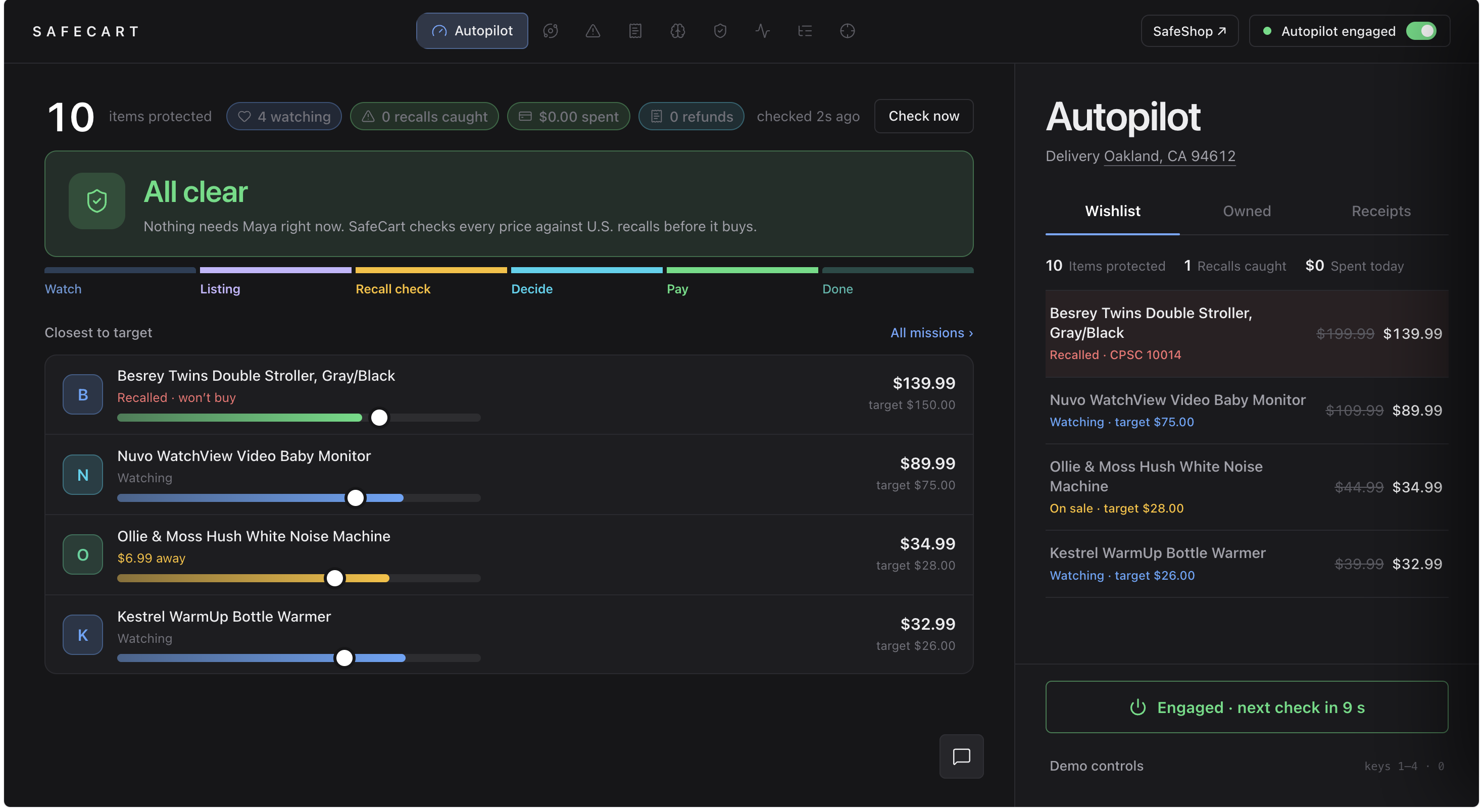
SafeCart is a personal shopping agent for busy people that auto-buys wishlist items when they go on sale, checks every purchase against real CPSC recall data first, and files a refund and buys a safe replacement when something they already own is recalled.
Community votes recognize the build and do not affect official judging.
Review the project
Start with the source code, then open the demo or video if available.
Tools used
 SingleStore
Event resource · Get started with SingleStore
Sign in to visit Senso.ai
Event resource · Docs
Sign in to visit Superlinked
Event resource · SIE Serverless
Sign in to visit Amplitude + Statsig
Event resource · Get started with Amplitude
Sign in to visit Persona
Event resource · Help center
Sign in to visit- Claude APINo link provided