SentinelEKS: an autonomous, evidence-grounded security agent for Kubernetes
Cryptominers and container escapes move in minutes, while SOC teams juggle separate sensors and AI that suggests actions it can't justify. SentinelEKS closes that loop on AWS EKS: it detects an attack, decides the response using only verified sources, checks its own fix, and contains the threat. A human approves only the destructive step.
How the tools work together:
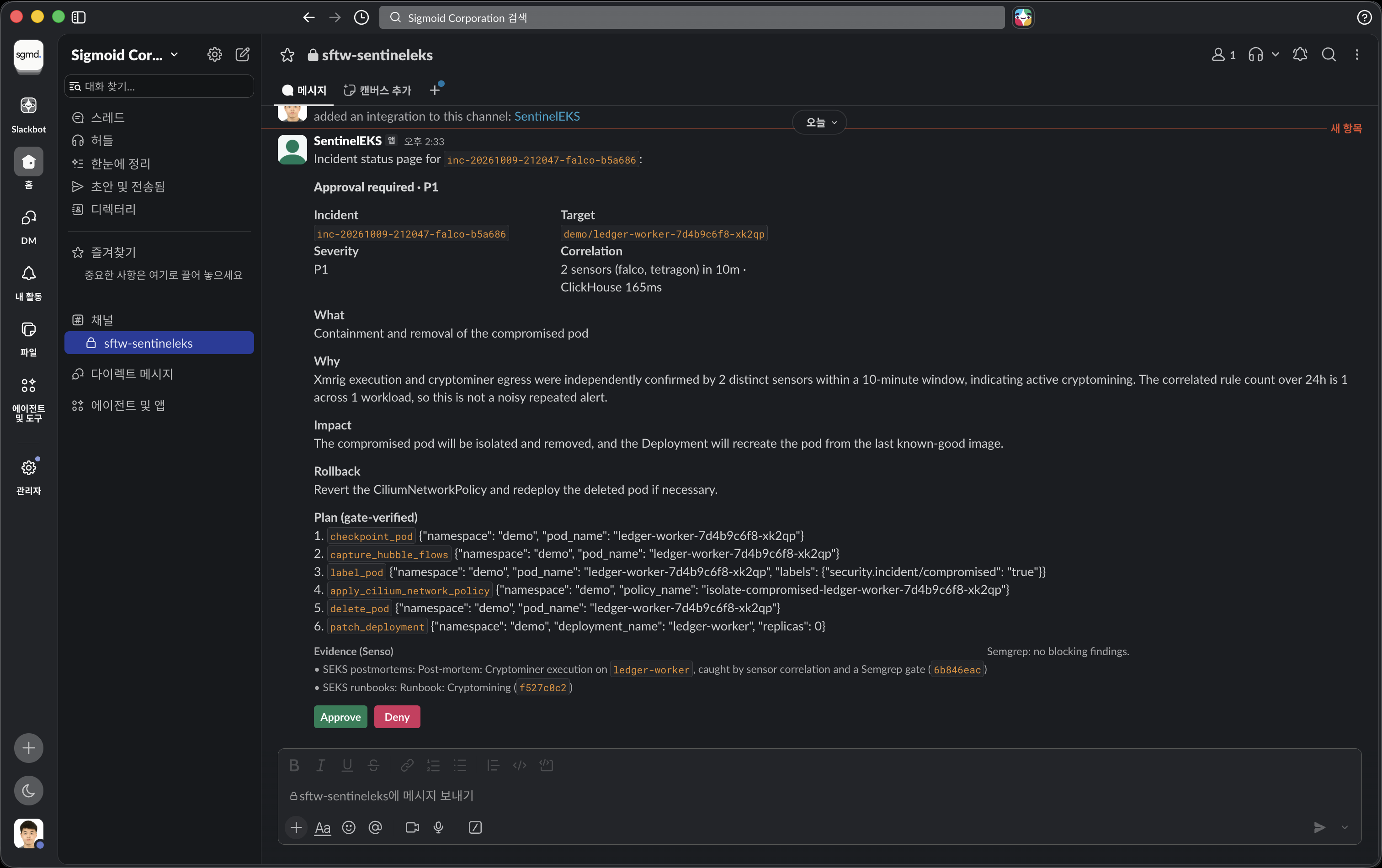
1. Detect and correlate. Falco, Tetragon and GuardDuty events flow through SQS into ClickHouse. Before triage we ask what other sensors saw on the same workload in the last 10 minutes; two or more independent sensors escalate severity, decided by code, not the LLM.
2. Decide with citations. Step Functions runs the agent chain. Bedrock (Claude Haiku) summarizes and triages; Akash-hosted Llama 70B plans the response; Senso returns the official runbook procedure with citations. No citation, no action: the incident goes to a human.
3. Verify before acting. Bedrock (Claude Sonnet) turns the plan into tool calls limited to a whitelist (snapshot, isolate, deny-all NetworkPolicy, SIGKILL, scale-to-0). Semgrep scans the generated manifest and Pi's Code Gatekeeper reviews it.
4. Act and record. Slack shows what, why, impact and rollback; one click executes via EKS MCP. MongoDB stores incident state and an insert-only approval audit; a Slack Canvas status page stays current.

 ClickHouse