Team 51
tuno
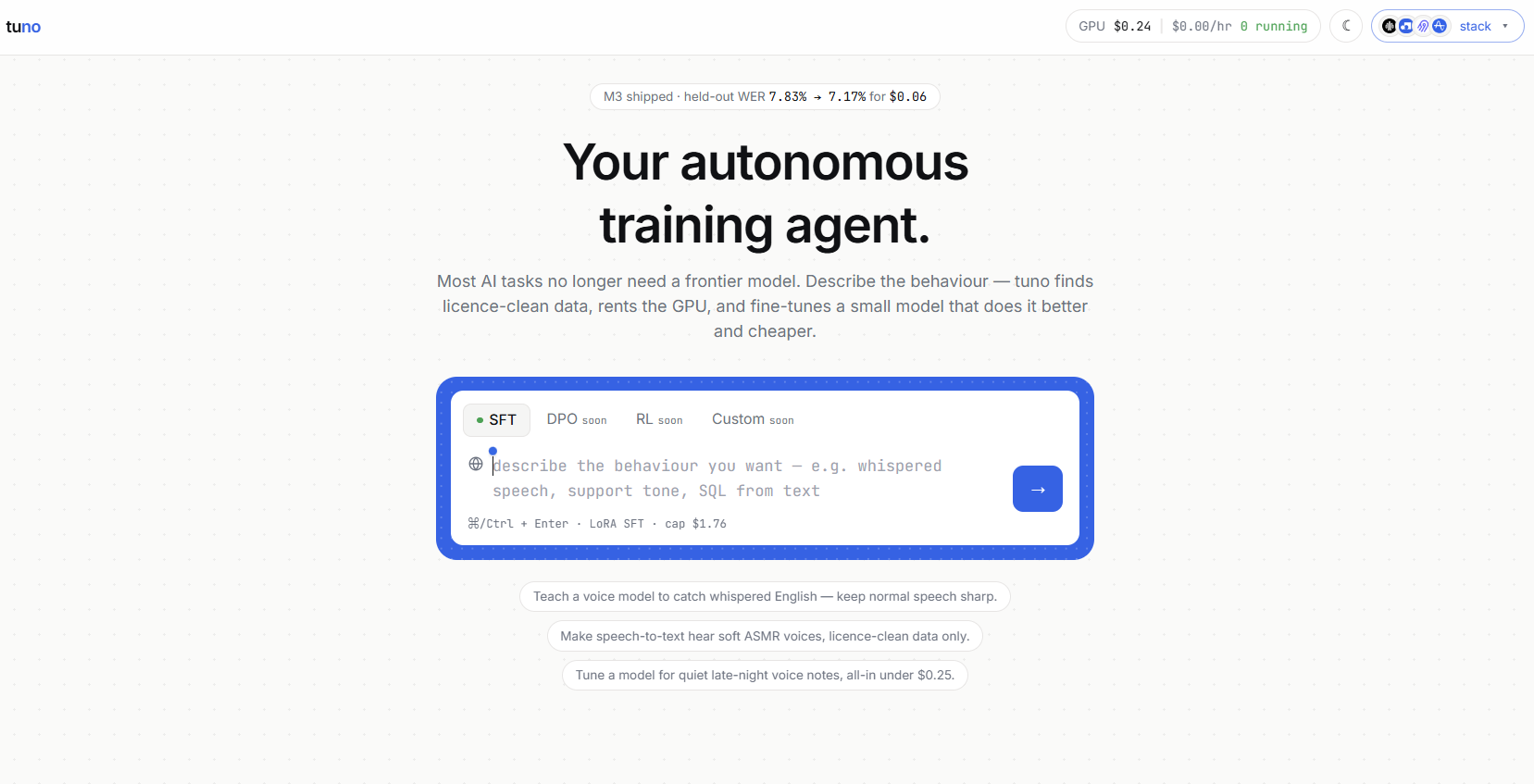
tuno is an autonomous training agent. Describe a behaviour; it recalls past runs (Cognee), finds and reranks licence-clean data (context.dev + Superlinked), ingests it (Airbyte), quotes and rents a GPU (JarvisLabs/modal/e2b), runs a live LoRA fine-tune, and keeps a receipt for every cent.
Community votes recognize the build and do not affect official judging.
Review the project
Start with the source code, then open the demo or video if available.
Tools used
Cognee
 Superlinked
Event resource · SIE Serverless
Sign in to visit Airbyte
Event resource · Airbyte Context docs
Sign in to visit SingleStore
Event resource · Get started with SingleStore
Sign in to visit Amplitude + Statsig
Event resource · Get started with Amplitude
Sign in to visit