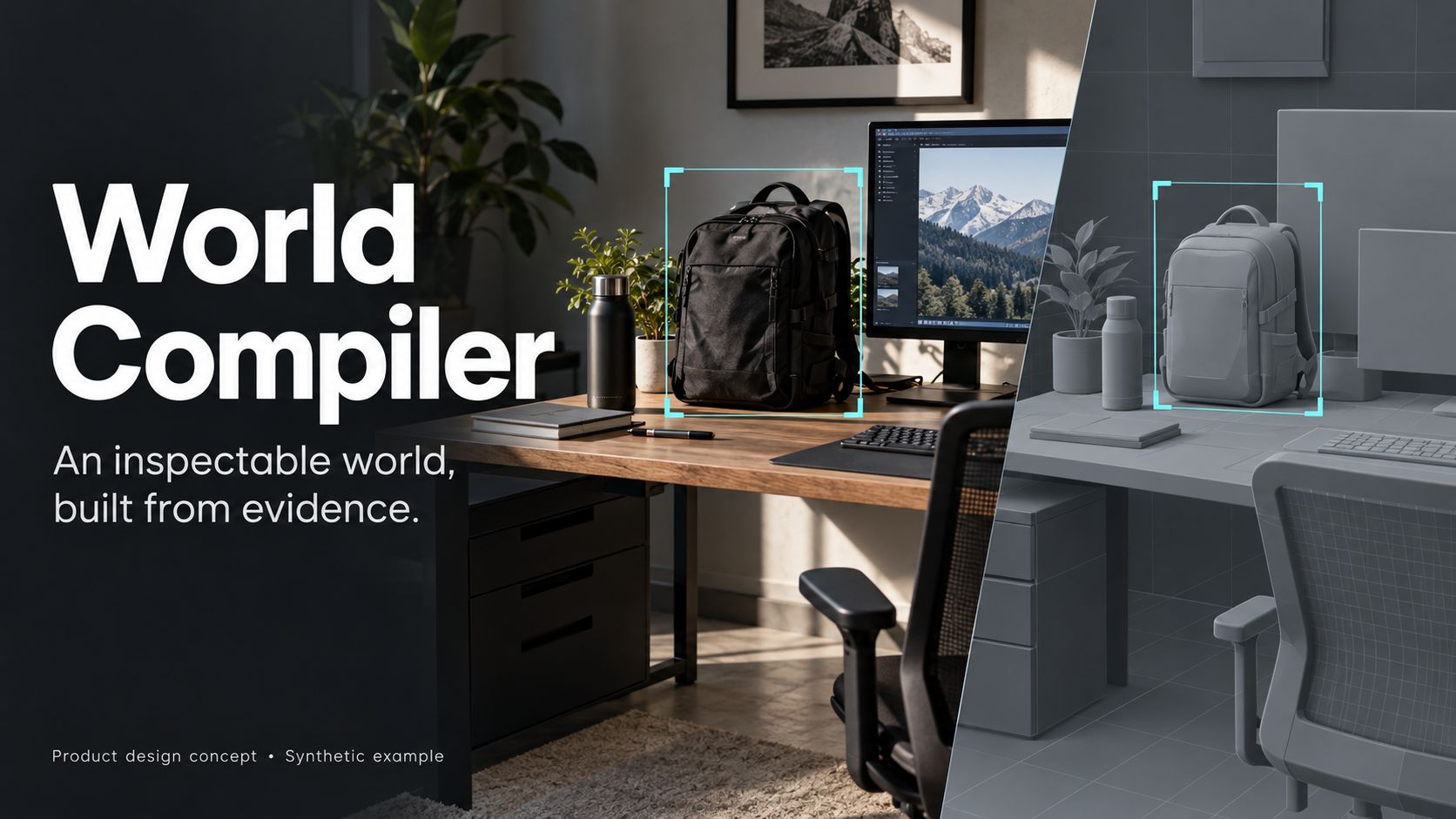
World Compiler turns captured video and sensor data from smart glasses into a structured, inspectable model of the physical world. It organizes observations into objects and claims, links each interpretation to its original evidence, and preserves a revision history. Users can review uncertain results, correct interpretations, and replay how the system’s understanding evolved without changing the original recordings.
Our hackathon work focused on building the actual compilers and connecting them to World Sensor, our separate capture platform for phone, desktop, and watch.
The technology stack brings together:
Cursor for developing the compiler backend, frontend, and integration workflows.VAST Data: Provided the VM used to run Cursor’s remote development and build environment for the compiler project.CoreWeave as part of the cloud compute infrastructure for GPU workloads.YOLO as the object-detection component of the perception architecture, feeding observations into the compiler rather than treating detections as final truth.The key distinction is traceability: the system connects what it believes about the world to what it actually observed, with human review and recorded corrections.

 SpaceXAI (Cursor)
 CoreWeave (Weights & Biases)
 NVIDIA